





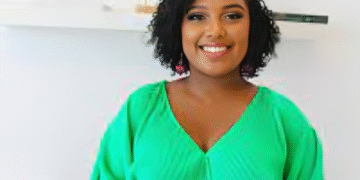






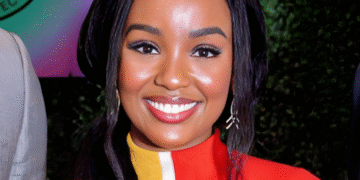






When Angela Waweru touches something, it transforms—from jewelry into justice, from podcasts into platforms, from community pain into collective purpose. At just 38, the Kenyan-British changemaker known as Lush Angela has emerged as a force stitching together two cultural worlds into a vibrant fabric of women’s empowerment, digital innovation, and regenerative business.

But her story is not just one of personal success—it’s a blueprint for what can happen when a daughter of the diaspora chooses to return home, not to visit, but to build.
A Lent-Fueled Awakening in Slough
Angela’s journey didn’t begin in the boardrooms she now advises or the counties she now mobilizes. It started in Slough, a town west of London, where she was working in recruitment after becoming disillusioned with the UK media industry. Armed with a media degree from the University of East London and production experience from Kenya, Angela found herself boxed in.
Then came a Lenten challenge that changed everything. “I gave up TV and realized I was spending £50 a week on non-unique jewelry,” she recalls. That moment sparked her side hustle—making her own. With a beginner’s kit and a creative spark, she started selling handmade pieces. Soon after, she won a young entrepreneurs’ competition.

“Digital lets us bypass traditional gatekeepers. We don’t need permission to tell our stories anymore.”
But the pull of Kenya was stronger than any UK trajectory. In 2015, with no mortgage and no children tying her down, she repatriated. She arrived in Nairobi with a suitcase full of her designs and sold out in her first week. “The urgency in Kenya’s market stunned me. The UK hadn’t responded like that,” she says.
Designing Impact with a Kenyan Soul
Angela didn’t just come back to sell jewelry—she came to root her vision in the soil of home. What followed was the birth of two unique brands:
- Malkia House of Jewels: A fashion-forward, affordable jewelry line blending Maasai beadwork with metals, recycled fabrics, and body chains celebrating African femininity.
- Pink Elephant: A greeting card venture inspired by a birthday card she once made for her mother, tapping into Kenya’s growing gifting culture.
But it wasn’t until she encountered period poverty firsthand that her trajectory shifted from fashion to movement-building. Girls were missing school. Mothers were improvising with rags and newspaper. Angela founded Heels4Pads—a social enterprise that sells preloved shoes to fund menstrual products for under-resourced girls.

What began as a 200-girl goal exploded during the COVID-19 pandemic. “Donations surged, needs multiplied, and we scaled,” she explains. As of 2024, 24,000+ beneficiaries—mostly adolescent girls—have been reached across 19 counties. Some have even received digital skills training and online business mentorship, turning short-term aid into long-term agency.
And the vision keeps growing. Her team is now deploying sanitary pad dispensers across schools, targeting 50,000 girls over the next five years. The effort isn’t just charitable—it’s systemic, sustainable, and Kenyan to its core.
Circular Thinking, Cultural Grounding
Angela’s return to Kenya also introduced her to a new way of doing business—one informed by grassroots resilience and environmental urgency. As Chair of CRAWN Trust, she now helps drive women’s economic inclusion at the policy level, tapping into Kenya’s devolved governance system to push county-by-county reforms.
Her activism is circular in more ways than one. Whether it’s through hosting the African Circular Economy Network Forum or partnering with Twala Women’s Group—a collective of aloe-farming anti-FGM champions—Angela is constantly turning waste into wealth, and tradition into innovation.
“Kenyan communities already practice regenerative culture,” she says. “What we’re doing is scaling that, while looping in everyone from designers to waste pickers.”

Broadcasting Belonging Through Digital Waves
As Kenya’s tech scene exploded, Angela didn’t just watch—she built. Through her OVA React Podcast, now with 600,000+ streams and a collaboration with Capital FM Kenya, she amplifies stories often left in the shadows: menstrual stigma, sexual health, digital finance, and grassroots entrepreneurship.
In one standout episode, Maasai permaculturist Priscilla of Twala Women’s Group explained how aloe vera farming became a tool to economically liberate women while ending female genital mutilation in their community.
For Angela, platforms like podcasts, Instagram shops, and AI-powered dispensers aren’t just tools—they’re bridges. “Digital lets us bypass traditional gatekeepers. We don’t need permission to tell our stories anymore.”
Why Kenya Made the Difference
Angela is quick to credit Kenya not just as her homeland, but as her launchpad. The ecosystem here—though challenging—offered space to prototype, connect, and scale. Four key elements enabled her success:
- Cultural Resonance: Kenyan consumers embraced her handmade pieces with a hunger she hadn’t seen in the UK.
- Community Networks: Partnerships with groups like Twala and Osuguroi enabled sustainable supply chains and real social reach.
- Urgency to Innovate: The visible gaps in access—especially around menstrual health—fueled fast, scalable, and relevant solutions.
- Policy Pathways: As CRAWN Trust’s leader, she is shaping gender justice through Kenya’s constitutional frameworks.
Her advice to the diaspora? “Start with what you have. Not everyone will get your vision—but you’re enough to begin.”
The Ripple Maker
Today, Angela is not just an entrepreneur or activist—she’s an architect of ecosystems. She’s training young Kenyans in podcast production through SisterSpeaks Global, mentoring youth in digital literacy, and piloting AI-powered dispensers to ensure pads get to the girls who need them most.
What drives her? A deeper vision: “I want a world where girls aren’t traded for goats, but are seen as innovators.”
She’s already building that world—one recycled necklace, one aloe leaf, one story at a time.
“Networks increase net worth. Find a few people in your space who truly get it—then build bridges for others to follow.” — Angela Waweru