












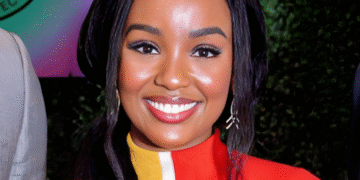
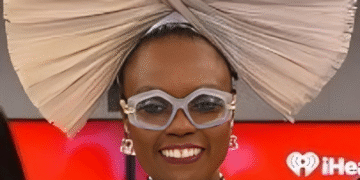



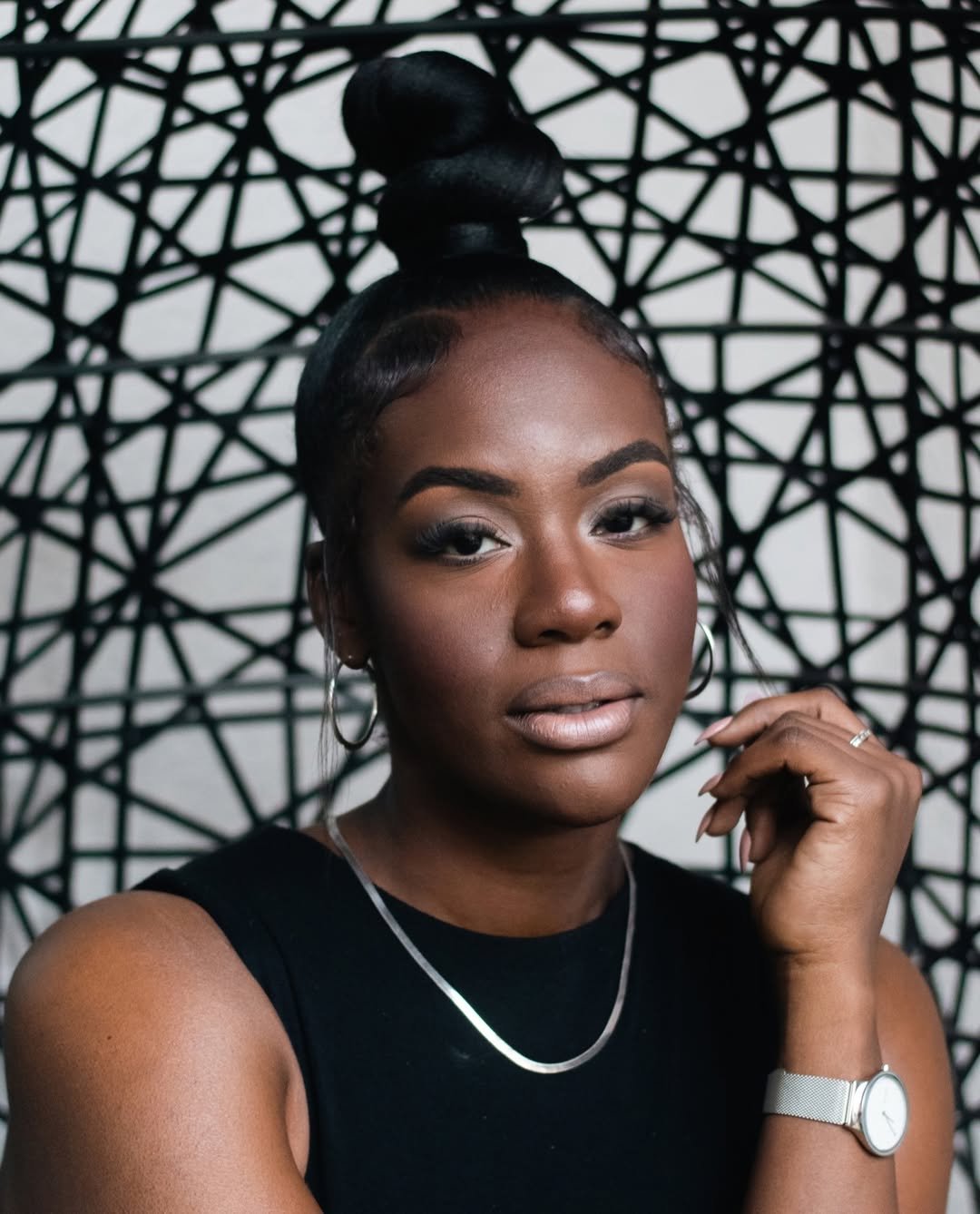
In the heart of Dallas, as the arena lights dimmed and the hum of anticipation filled the air, Ivy Awino—known to most as DJ Poizon Ivy, and more recently Ivy Winfrey—stepped behind the turntables and did something subtle but seismic. She cued up an Afrobeat track. The rhythm pulsed through the stadium, unfamiliar yet magnetic. J.J. Barea moved instinctively, Luka Dončić nodded with curiosity. Ivy watched quietly, a knowing smile on her face.

This wasn’t just a vibe shift—it was a cultural shift. And it was exactly what she’d been preparing for her whole life.
A Childhood of Crossings
Born Ivy Awino in Nairobi to a Luo father and a Luhya mother, she grew up in Texas with two passports and countless identities. Her childhood spanned continents—Kenya’s warmth, America’s pace, and the tug of two homelands echoing inside her.
She didn’t always know how these pieces fit. But she always knew they were hers. While other kids clung to uniformity, Ivy thrived in duality. She was just as at home in a Kenyan kitchen as she was in a Texan basketball gym. This “in-betweenness” wasn’t confusion—it was fluency. And over time, it would become her Superpower.
From Ball Kid to Sixth Man
Ivy’s introduction to the NBA didn’t come through a spotlight. It came through sweat. As a Mavericks ball kid, she was sweeping floors, catching rebounds, and learning—unconsciously—that energy is everything.
In college at Marquette, she juggled seven jobs at once: internships at radio stations, label work, retail shifts. One night, in a dorm kitchen with borrowed DJ gear, she played around with mixing—and discovered her calling. Music wasn’t just a passion. It was a portal. And when she fused it with her lifelong love for basketball, a career was born.

In 2016, she made NBA history as the first Black woman to become a Team DJ. Not just a playlist curator, but a game-changer. Literally. “I’ve always said music can shift momentum,” she shared. “It can be a sixth man.”
Fluent in the Language of Duality
The deeper she leaned into her identity, the wider her impact stretched.
She didn’t just play for the players—she played to them. Reggaeton for Barea. Slovenian pop for Luka. Afrobeat for everyone. She understood something most marketers and executives still
struggle with: Representation isn’t a checkbox. It’s an artform. When done right, it moves bodies, bridges cultures, and builds belonging.
In 2016, she made NBA history as the first Black woman to become a Team DJ. Not just a playlist curator, but a game-changer. Literally. “I’ve always said music can shift momentum,” she shared. “It can be a sixth man.”
She brought that same fluency to AFROBALLERS—a platform she co-founded to center African athletes and tell their stories without compromise. No pity narratives. No stereotypes. Just power, pride, and presence.
Her ethos was simple: Let Africa speak for itself.
A Mother, A Mentor, A Mirror
Offstage, Ivy’s life is no less rich. Her daughter, Kyani, is her anchor. Her heartbeat. Her “full-time job.”
Motherhood deepened her resolve. It clarified her mission. Whether DJing for 30,000 or speaking at the East Africa Gender Conference, she knew what was at stake: visibility, dignity, legacy.
“I want to be a mirror through which women find themselves,” she said. And she meant it. Not metaphorically. Literally. If a girl from Nairobi, raised in Texas, can command NBA arenas and global stages, then what can’t our daughters do?
Kenya, Reimagined
Ivy never forgot where her story began. But she also refused to treat Kenya like a memory. She treats it like a partner.
She co-organized sports and music equipment donations to Nairobi schools—investing in infrastructure, not just inspiration. She collaborates with Kenyan changemakers like MP Babu Owino and champions gender equity in every space she enters.
She doesn’t return to Kenya as a visitor. She returns as a reclaimer. Reclaiming the narrative. Reclaiming the sound. Reclaiming her role.
“If I can play reggaeton in an arena,” she once said, “why can’t I play Afrobeat?” That simple question unraveled decades of sonic colonization. And Ivy didn’t just ask it—she answered it.
The Architect of Belonging
Today, Ivy’s mission is crystal: Build the future. Bridge the worlds. And bring others along.
Her legacy isn’t just what she’s done—it’s how she’s done it. With humility. With duality. With audacity.
She is Texas and Kenya. A mother and a mogul. A DJ and a strategist. She plays the beats, yes—but she also designs the blueprint.
And when she called her eighth Mavericks season the “Season of Ivy Winfrey,” it wasn’t ego. It was intention. A declaration that this is no longer about making history. It’s about architecting the future.
A future where cultural strategy is driven by story. Where brands don’t “target demographics,” they invite them home. A future where being “in-between” isn’t a burden—it’s a bridge.
Final Note: The Anthem of a Borderless Generation
When Ivy Owino steps off a plane in Dakar for NBA Africa initiatives, she isn’t just bringing music. She’s bringing a frequency. One that resonates across oceans. One that says: You don’t have to choose between your worlds. You can weave them.
She’s not just soundtracking the game. She’s soundtracking a generation of diasporans daring to belong everywhere.
And the beat goes on.